Just Another Book Club- January Book

Please leave your comments below or within the appropriate post on my Facebook page. Please feel free to peruse other people’s comments and respond to them.

***Please be aware this is a book club discussion, so there is the possibility that my review or the comments left by others will contain spoilers***

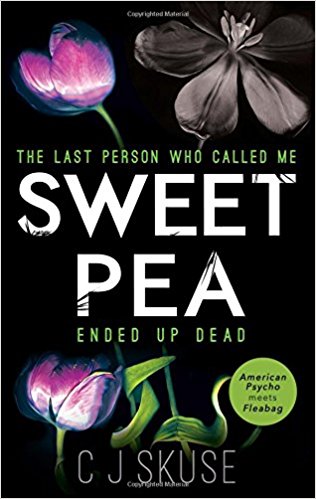
Sweet Pea

by CJ Skuse

51QKj-4IPUL._SX314_BO1,204,203,200_

Synopsis

Incredibly bored and ambitious Rhiannon likes to make daily lists. Don’t we all, except her list are “kill lists”. She writes a list every day of everyone she would personally like to kill and at times she is able to tick off that list. A childhood trauma, left Rhiannon a minor celebrity and it is through this tragedy that we learn how Rhiannon has become the person she is today; a foul-mouthed, deadly and dark young woman.

My Review 

What a lovely way to start our book reading year. I thought I’d throw us into the deep end with this shocking and graphic thriller. As the first chapter opens with the protagonist castrating a man and leaving him to drown, I knew I was on to a beautiful, enchanting start to our reading year.

So firstly, I found this book very easy to read. Yep, even with the shocking content of the book, I still carried on turning the pages and reading with ease (does this say more about me or the author?). It was the epitome of a “page-turner” though.

Red magazine described the book as Bridget Jones meets American Psycho. I think this is a perfect description of the book. While I don’t think I need to elaborate on why it’s similar to American Psycho, the diary-style chapters and the humorous references to weight and self-image certainly gave it an air of Bridget.

However, this is where the book falls down for me. With the author’s use of language, I felt she was trying too hard to be funny and shocking. Let’s be honest, I’m not one to be phased by profanity or crudeness. I wasn’t shocked by her use of these things. It just didn’t entertain me. I was a tad arms-crossed-you-think-that’s-shocking-you-should-hear-me-out-with-the-Mums-from-school-on-a-Friday-night about it. You can relax, we don’t go around castrating men or anything (not that I recall anyway). I think the point I’m trying to make is that, it reminded me of a teenager trying to act tough to impress people. I didn’t buy it.

I can’t decide if it was lack of direction or actually a clever ploy by the author, that my opinion of the protagonist was slightly conflicted. Generally, I couldn’t stand her and at times I thought the author wanted us to actually like her in a twisted way. My conflicted feeling about Rhiannon only came into play when I thought about her traumatic past that goes some way to explain why she does the things she does. It enabled me to feel a sliver of sympathy for her, but not for long as not one of the murders she committed was actually justified. In fact, I think her past actually just provided an understanding of her actions rather than feeling actual sympathy. I do feel the author partly wanted us readers to cheer Rhiannon on from the side line as she castrated a man (albeit an absolute wank stain of a man, who deserved a sharp kick in the balls and to be reported to the police), but there is absolutely no way I found myself warming to Rhiannon at any point.

What I do know is that she clearly wasn’t a well person. Now, I understand that a psychopath (and I’m not using that word flippantly), can function quite normally in the world, with many people not having a clue what they’re really like, BUT I’m still not convinced by the way the author portrayed the contradictions within her personality. The whole “just baked a lovey cake, now I’m just going to grab my knife and slice someone up that gets on me nerves” act was unconvincing. Maybe it’s truthful (I’m bold enough to assume I’m personally not a psychopath, so what do I know about how a psychopath thinks). I just wasn’t convinced with the way the author sold Rhiannon’s personality to us.

ALSO, I’m clearly not convinced by a lot of aspects of this book (man, I really am a cynical misery sometimes), but I wasn’t persuaded by the relationship between Rhiannon and Craig. They were so utterly incompatible, I just didn’t see why they got together in the first place. I understand, that the author wanted to show Rhiannon in an unhappy relationship, but I literally couldn’t fathom what they would have seen in each other at the beginning of the relationship. I think she could’ve been a bit cleverer about this relationship.

Now, you can completely judge me on the next point I’m going to make (if you haven’t already), but thank God she killed AJ off. He was such an irritating character, she did us all a favour there.

The ending was very satisfying for me. I would have been very upset if justice hadn’t prevailed. I also figured that the baby may have gone to AJ’s Aunt (as the next closest relative) to look after, which is actually quite nice after all the grimness of the book.

In conclusion, this is a cynical and bleak book. The attempts to make it witty and the protagonist likeable failed for me. However, I couldn’t stop reading it and it kept me gripped until the end. I prefer a book with more substance, but it was entertaining nonetheless.

February’s book is Hold Back the Stars by Kate Khan. I’ll be starting the conversation for this on Monday 5th March.

A list of all the books we’ll be reading for the first half of 2018 can be found here

I’ve finally sorted out my Goodreads page, so as a few people have asked, you can view it here

Just Another Book Club- December Book

Please leave your comments below or within the appropriate post on my Facebook page. Please feel free to peruse other people’s comments and respond to them.

***Please be aware this is a book club discussion, so there is the possibility that my review or the comments left by others will contain spoilers***

At the end of this post, I’ve listed the 6 books we read in 2017 in my order of preference. I’ve also listed my 3 favourite books that I’ve read this year that weren’t part of the book club.

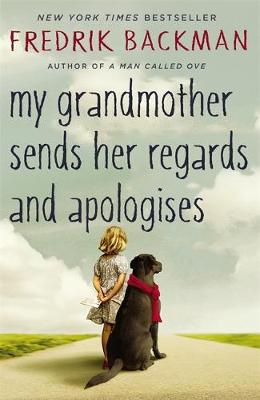
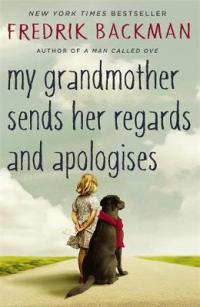
My Grandmother Sends Her Regards and Apologises

by Fredrik Backman

9781444775853

Synopsis

7 year old Elsa is left letters from her grandmother, apologising to all the people in her life she has wronged. This sends Elsa on quite the adventure as Elsa’s grandmother was not your average grandmother. It’s a part-fantasy/part-reality book, where you are are often transported to the imaginative world that Elsa’s grandmother created for her through epic story telling.

My Quick Review

I always say these are going to be quick reviews by me, but they never seems to be. I’m going to try my best this time. So, the first chapter of this book is quite simply one of the most beautiful beginnings to a book that I have ever read. As someone who was very close to her grandmother, it moved me immeasurably, as I imagine it would a lot of people. The author does an excellent job of illustrating the valuable closeness that exists between Elsa and her grandmother and it’s incredibly heart warming.

I like how the author intertwined philosophy throughout the book especially through the stories that the grandmother told Elsa.

As I mentioned above, Elsa’s grandmother is not your usual grandmother. A doctor who saved numerous lives during the war, a woman who never wanted to settle down with one man, a smoker, a terrible driver, a poker player not to mention an excellent story teller. She is by far the best character in it (followed by Britt-Marie), so it is with great shame that she dies so early on in the book. However, I understand why this was necessary and her character still manages to dominate the rest of the book. I loved that the grandmother was Elsa’s hero, but she is not her hero for the obvious acts of heroism in the war (in fact she’s quite cross with her grandmother with regards to that), she is her hero for much smaller reasons that are important to a 7 year old child. One of my favourite scenes with the grandmother is when they were in the headmaster’s office and Elsa’s grandmother ends up throwing a globe at the headmaster’s computer. This was a reaction to the headmaster suggesting that Elsa should take part of the blame for a boy hitting her as she had provoked him and that he had problems controlling himself. “I WAS PROVOKED” Elsa’s grandmother screams at the headmaster as she throws the globe “I COULDN’T CONTROL MYSELF”. Do you see what I mean? She is my hero too.

Moving on to my second favourite character, Britt-Marie. I wonder if she is possibly one of the most tragic characters I’ve read in a book. So desperately lonely and in need of human contact, she purposely loses her husband’s items just so he’ll say her name when he asks her where things have gone. And of her own admittance, she has become a busy-body in her life just so her presence has some effect on people even if it is a negative effect. Otherwise, she would feel like she didn’t exist and would feel an overpowering numbness. It’s so sad and it made me think about people who I know act like Britt-Marie. It made me have sympathy towards them and made me think that in the future I would act differently towards them. A book that makes you look at things differently, is a good book indeed.

However.

Here comes my big but (I said BUT not butt thank you).

A third of the way through the book, my interest started to wane. I’m generally not a fan of fantasy. I’ve tried to get into Neil Gaiman and authors similar to him, but I always struggle. I have little patience for it and the last fantasy book I enjoyed was Alice in Wonderland when I was 9 years old. So, I found myself losing my concentration every time we visited the fantasy world of Elsa and her grandmother. Whilst, I appreciated how lovely it was that her grandmother had created this fantasy world for her and whilst I also appreciated how this fantasy helped Elsa make sense of the world and also helped her deal with issues, it just wasn’t for me. It was the weakest parts of the book and I also think it didn’t quite work in combination with the harsh realities of Elsa’s real world.

Nevertheless, I got back into the book again for the final third of the book.

In general, this book is worth the read. It is beautiful, profound and entertaining and I am not afraid to admit that it made me cry at the end (for those that have read the book I’m referring to the scenes with the Wurse).

Here are a few of my favourite quotes (oh I really didn’t do a good job of doing a quick review, did I?):

“Having a grandmother is like having an army. This is a grandchild’s ultimate privilege: knowing that someone is on your side, always, whatever the details. Even when you are wrong. Especially then, in fact”

“The Noween hates children, because children refuse to accept the Noween’s lie that time is linear. Children know that time is just an emotion, so ‘now’ is a meaningless word to them”

“Because you can be upset while you’re eating chocolate Santas. But it’s much, much, more more difficult”

“We want to be loved. Failing that, admired; failing that, feared; failing that, hated and despised. At all costs we want to stir up some sort of feeling in others. Our soul abhors a vacuum. At all costs it longs for contact”

“And Maud bakes biscuits, because when the darkness is too heavy to bear and too many things have been broken in too many ways to be fixed again, Maud doesn’t know what weapon to use if one can’t use dreams. So that’s what she does. One day at a time. One dream at a time. And one could say it’s right and one could say it’s wrong. And probably both would be right. Because life is both complicated and simple. Which is why there are biscuits”

“Because if a sufficient number of people are different, no one has to be normal”

Questions to consider

1. My Grandmother Send Her Regards and Apologises begins with the pronouncement, “Every seven-year-old deserves a superhero.” (page 1) Do you agree? Why is it so important that children have heroes? Who were your heroes when you were a child?

2. Names play a significant part in Elsa’s grandmother’s stories. How do the various kingdom and heroine names from the Land-of-Almost-Awake (Miamas, Miploris, Mimovas, Wolfheart, the Chosen One, the sea-angel, etc.) inform your understanding of Granny’s stories? Did you agree with how their real world counterparts were portrayed in the stories?

3. Elsa’s mother grew up in a nontraditional family environment. Do you think this influenced her parenting style with Elsa? In what ways?

4. Were you surprised by the ways in which each of the apartment tenants were connected to the others? Which relationship surprised you the most? Why?

5. Granny is a polarizing figure in My Grandmother Send Hers Regards and Apologises. Describe the way each of the characters reacts to her. Do you think their opinions of her are justified? Why or why not? What did you think of Granny? Do you know anyone like her?

6. Discuss the role that books, especially the Harry Potter novels, play in Elsa’s life. Why do you think Elsa relates to the Harry Potter books more than other novels? When you were growing up, were there books you particularly loved? Which ones and why?

7. What did you think of Britt-Marie when you first encountered her? Did she remind you of anyone in your life? Where do you think Britt-Marie goes at the end of the novel?

8. Elsa believes that her “teachers are wrong. [She] has no problems concentrating. She just concentrates on the right things.” (page 47) What kinds of things does Elsa concentrate on? How does this create problems for her? Do you think that Elsa is a good student? Why or why not?

9. Which of the characters in My Grandmother Send Her Regards and Apologises surprised you the most? Why?

10. Discuss Britt-Marie’s marriage to Kent. Did you think they were well suited for each other? Do you think the marriage changed Britt-Marie? How can being in a bad relationship affect someone’s personality?

11. Fairy tales can provide a way to teach children some fundamental truths about the world. How do Granny’s fairy tales help Elsa understand the world around her? What lessons does Elsa take away from the tales her Granny tells her about life in the land of Miamas?

12. When her grandmother dies, Elsa is of course sad, but she also experiences a wide range of other emotions, including anger. Can you name some of the others? Consider how the loss of a loved one can lead us to have feelings that are much more complicated than sadness.

13. In this book, as in his previous novel A Man Called Ove, Fredrik Backman paints a vivid portrait of the relationship between an older person nearing the end of his or her life, and a young child. What can people at the opposite ends of life learn from one another? How are the very old and the very young alike? How are they different? When you were very young, was there an elderly person who played a significant role in your life? What did you learn from them?

(Questions issued by the publisher)

January’s book is Sweatpea by C.J. Skuse. I’ll be starting the conversation for this on Monday 5th February.

A list of the new books we’ll be reading for the first half of 2018 can be found here

My order (by how much I enjoyed them) the 6 books we read in 2017 (click on title for book club discussion):

6. Hotel Alpha by Mark Watson

5. All the Light We Cannot See by Anthony Doerr

4. My Grandmother Sends Her Regards and Apologises by Fredrik Blackman

3. Irresistible by Adam Alter

2. A Million Little Pieces by James Frey

1.Homegoing by Yaa Gyasi

81qLl64WbrL

My 3 favourite books that I read this year (but weren’t part of the book club):

3. My Name is Leon by Kit De Waal

2. Half the Sky: how to change the world by Nicholas D. Kristof & Sheryl WuDunn

1.The Sellout by Paul Beatty

methode-times-prod-web-bin-e999a11e-9b89-11e6-af4a-15a7db50bae8.jpg

My absolute favourite book this year was Homegoing.

See you in February!


Just Another Book Club- 2018 (part I)

Books-IFOA-2016-Tanja-Tiziana

Hooray, a new list of books for you to read! I set this online book club up last year as a way to reconnect people with a love of books and reading. I am as guilty as the next person of picking my phone up far more often than a book. So after enjoying running this online book club during the latter part of 2017, I’ve decided to continue it on into 2018 and I’d absolutely love for you to join me again. So for those of you that are new to my book club or need a reminder of how it works. Here’s a few pointers:

  1. I will provide a list of 6 books, one for each month for the first half of 2018.
  2. I’ll always provide at least one non-fiction book within a list.
  3. At the beginning of the following month, I’ll publish a quick post with my thoughts on the book.
  4. Your lovely selves can then provide your thoughts/opinions within the comments section (or within my Facebook blog page) and a discussion can evolve from there.
  5. Obviously, there’s no obligation. You can read all six, only three or just the one. Whatever suits you best or how much you want to join in.
  6. You can join in the discussion whenever you want, but the closer to the time I published my book review post the better, as you’re more likely to get a response from other readers. I’ll always respond though, so you really are welcome to leave your comment whenever you have finished a book. There are no time constraints.
  7. If this is continues to be a success, I’ll list 6 more books in June for the latter part of 2018.
  8. Drinking wine/gin/tea/coffee isn’t obligatory whilst joining in with the discussion about these books, but it might help.
  9. Any questions, let me know.

Okay, so now for the 6 books for the first half of this year.

  • January: Sweet Pea by C.J. Skuse

51QKj-4IPUL._SX314_BO1,204,203,200_

  • February: Hold Back the Stars by Katie Khan

51F452mNI8L._SY346_

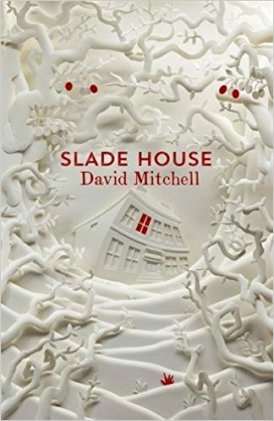
  • March: Slade House by David Mitchell

51ta3m0XibL._SX322_BO1,204,203,200_

  • April: Animal by Sara Pascoe (our non-fiction book selection)

9780571325245

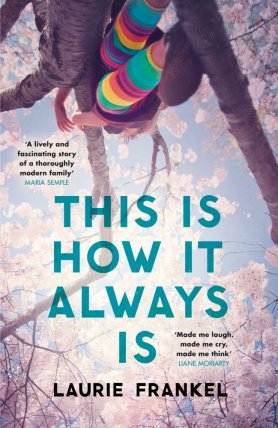
  • May: This is How it Always Is by Laurie Frankel

9781472241580

  • June: Stay With Me by Ayobami Adebayo

31349579

The chosen list of books is final. If you don’t fancy reading a particular book one month, just give it a miss that month. Hopefully, I’ll continue this again for the second half of the year too.

Lastly, I just want to thank the lovely Angela at You Are Awesome blog for providing me with the inspiration to set this up and also for her solid, continued support. Check out her blog post here about book clubs and her blog in general. She’s literally- the best.

So, join me! Together we can put our phones down and pick up a book. Do me a favour first though and please spread the word. It will be fantastic to get people from across the globe coming together to discuss a mutual love- books.

For a list of the books we discussed in 2017, click here.

home-library-21

My dream home library (dog included).

Just Another Book Club- November Book

Please leave your comments below or within the appropriate post on my Facebook page. Please feel free to peruse other people’s comments and respond to them.

Homegoing

by Yaa Gyasi
81qLl64WbrL

Synopsis

In summary, Homegoing is the sprawling tale of two families split between America and Africa. At the beginning of the book we learn how two sisters are born, but never meet. The book tells the story of each generation that follows from both sides of the family over many years. Through slavery, one family is based in America whilst the other remains in Africa. The title of the book origin’s derive from an old African-American belief that death allowed an enslaved person’s spirit to travel back to Africa.

My Quick Review

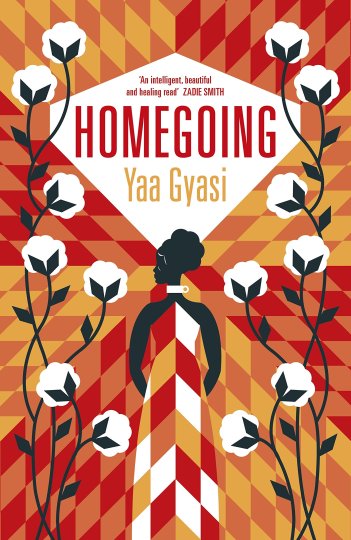
First of all, I know one is not meant to judge a book by its cover, BUT I really wanted to mention how gorgeous the cover is for Homegoing and you’ll like this seamless connection: it’s almost as gorgeous as the book itself. Thank you.

But let us move on to more profound thoughts on this book. In short, the enormity of the importance of this book cannot be overstated. It is one of those books that people should be forced to read as it gives the reader a greater understanding of the world and the fabrics of its society (I think there’s a post brewing which lists all the books that I think people should be made to read. One day, I’ll get round to it).

I thought I knew a fair bit about the history of slavery, but after reading this book I realised I knew not nearly enough. Through reading this I learnt so much about African culture too. I absolutely adore books that I can learn from and this book is no exception.

This book at times made me feel ashamed to be British (I’m referring to our disgusting slavery history) and I can imagine the same would be said for an American reading the book. The book so often made me angry and the deplorable injustices that were suffered by slaves and the generations that followed them (my heart will forever break for H and Kojo).

Whilst, this book was consistently shocking and disturbing, the writer somehow managed to write in such a beautiful way. The strength of characters made the reader fall in love with them and root for them (even the flawed characters).

I loved how each chapter represented a different character from a different generation. Referring back to my previous comment, whilst the subject matter of each chapter was often horrific, it also felt like each chapter was telling a different love story. Ultimately, what connects each story to each other is love.

The book sits uneasily with the reader as so many of the issues you read about that existed many years ago, still prevail in America today. It’s abhorrent that one reads and thinks “how has any of this really changed?”. I think the book does a very good (and eloquent) job of illustrating this.

I thought the symbolism of the stone necklace was perfect. For me, I felt like it represented African history. When an African was taken from Africa and enslaved and shipped off to America, it was as if their African history was erased. The African-American person’s history then starts with slavery in America, but this of course not the start of their history. When Marjorie hands Marcus the stone necklace, it is like she is handing back his rightful history that was so cruelly taken from him and his ancestors. It is a beautiful and extremely emotional moment.

It was interesting that Marjorie and her side of the family seemed to represent fire and that Marcus’s represented water. When Marjorie and Marcus meet and connect, they persuade each other to embrace the element that they each fear. In this sense, Marjorie and Marcus complete each other.

This book is a fantastic achievement for a debut author. It is truly wonderful and so far (though we only have one book left on the list), this is my favourite book that we have read.

I loved so many quotes in this book. I made a list for you.

The need to call this thing “good” and this thing “bad”, this thing “white” and this thing “black”, was an impulse that Effia did not understand. In her village, everything was everything. Everything bore the weight of everything else.

Slavery aint’ nothin’ but a dot in your eye, huh? If nobody tell you, I’ma tell you. War may be over but it ain’t ended. 

He was not the con they had told him he was.

This is the problem of history. We cannot know that which we were not there to see and hear and experience for ourselves. We must rely upon the words of others….(for example) Kojo says that when the warriors came to his village the coats were red, but Kwame says that they were blue. Whose story do we believe, then? We believe the one who has the power. He is the one who gets to write the story. So when you study history, you must always ask yourself , Whose story am I missing? Whose voice was suppressed, so that this voice could come forth?

The news made it sound like the fault lay with the blacks of Harlem. The violent, the crazy, the monstrous black people who had the gall to demand that their children not be gunned down in the streets. 

The Ruin of a Nation Begins in the Homes of Its People
21939985._SX540_

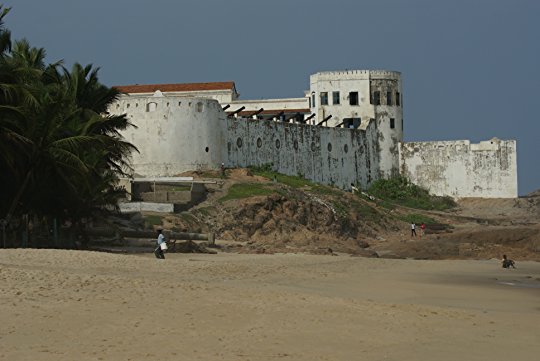
Cape Coast Castle, Ghana

Questions to Consider

1. Evaluate the title of the book. Why do you think that the author chose the word Homegoing? What is a homegoing and where does it appear in the novel? In addition to the term’s literal meaning, discuss what symbolic meanings or associations the title might have in terms of a connection with our place of birth, our ancestors, our heritage, and our personal and cultural histories.

2. Explore the theme of belief. What forms of belief are depicted in the book and what purpose do these beliefs seem to serve for the characters? Does the author reveal what has shaped the characters’ beliefs? Do these beliefs seem to have a mostly positive or negative impact on the believer and those around them?

3. What perspective does the book offer on the subject of beliefs and otherness? For instance, does the book delineate between superstition and belief? Why does Ma Aku reprimand Jo after he is kicked out of church? What do the Missionary and the fetish man contribute to a dialogue on beliefs and otherness? Does the book ultimately suggest the best way to confront beliefs that are foreign to us?

4. Evaluate the treatment and role of women in the novel. What role does marriage play within the cultures represented in the novel and how are the women treated as a result? Likewise, what significance does fertility and motherhood have for the women and how does it influence their treatment? In the chapter entitled “Effia,” what does Adwoa tell Effia that her coupling with James is really about? In its depiction of the collective experiences of the female characters, what does the book seem to reveal about womanhood? How different would you say the treatment and role of women is today? Discuss.

5. Analyze the structure of the book. Why do you think the author assigned a chapter to each of the major characters? What points of view are represented therein? Does any single point of view seem to stand out among the rest or do you believe that the author presented a balanced point of view? Explain. Although each chapter is distinct, what do the stories have in common when considered collectively? How might your interpretation of the book differ if the author had chosen to tell the story from a single point of view?

6. Consider the setting of the book. What time periods are represented and what places are adopted as settings? Why do you think that the author chose these particular settings? What subjects and themes are illuminated via these particular choices? How does the extensive scope of the book help to unify these themes and create a cohesive treatment of the subjects therein?

7. In the chapter entitled “Quey,” Fiifi tells Quey that “[the] village must conduct its business like [the] female bird” (53). What does he mean by this and why do you think that Fiifi chooses this approach?

8. Why was Quey sent to England? After his return home, why does Quey say that it was safer in England? Why might he feel that what he faces at home is more difficult than the challenges he faced in leaving home and living abroad?

9. James’s mother, Nana Yaa, says that the Gold Coast is like a pot of groundnut soup (89). What does she mean by this?

10. Why does Akosua Mensah insist to James, “I will be my own nation” (99)? What role do patriotism, heritage, and tradition play in contributing to the injustices, prejudices, and violence depicted in the book? Which other characters seem to share Akosua’s point of view?

11. Explore the theme of complicity. What are some examples of complicity found in the novel? Who is complicit in the slave trade? Where do most of the slaves come from and who trades them? Who does Abena’s father say is ultimately responsible (142)? Do you agree with him? Explain why or why not.

12. Examine the relationships between parents and children in the book. How would you characterize these relationships? Do the children seem to understand their parents and have good relationships with them and vice versa? Do the characters’ views of their parents change or evolve as they grow up? How do the characters’ relationships with their parents influence the way that they raise their own children?

13. What significance does naming have in the book? Why do some of the characters have to change or give up their names? Likewise, what do the characters’ nicknames reveal both about them and about those who give or repeat these names? What does this dialogue ultimately suggest about the power of language and naming?

14. Explore the motif of storytelling. Who are the storytellers in the book and what kinds of stories do they tell? Who is their audience? What might these examples suggest about the purpose and significance of a storytelling tradition?

15. According to Akua, where does evil begin? Where else in the book do readers find examples that support her view? What impact does Akua’s opinion have on Yaw’s lifework? Does he agree with Akua’s view or refute it? Do you agree with her? Discuss.

16. What is history according to Yaw? What does he tell his students is “the problem of history” (226)? Who does Yaw say we believe when reading historical texts and what does he say is the question we must ask when studying history? How might these ideas influence your own reading of Gyasi’s book and reshape your ideas about the historical subjects and themes treated therein?

17. Sonny says that the problem in America “wasn’t segregation but the fact that you could not, in fact, segregate” (244)? What does he mean by this? What does Sonny say that he is forced to feel because of segregation? Which of the other characters experience these same feelings and hardships? Does there seem to be any progress as the story goes on? If so, how is progress achieved? Alternatively, what stymies and slows progress in this area?

18. What is Marcus studying and why isn’t his research going well? What feeling does he indicate that he hopes to capture with his project? Why does Marcus go to Ghana and what does he learn from his experiences there? Marcus believes that “most people lived their lives on upper levels, not stopping to peer underneath (298). What does he mean by this? Where do we find examples of this elsewhere in the book? Are there any characters in the novel who defy this characterization?

19. Consider the book’s treatment of colonialism and imperialism. In the chapter entitled “Esi” at the start of the book, what does Esi’s mother tell her daughter that weakness and strength really are? How does her definition of weakness and strength correspond to the dialogue about colonialism and imperialism that runs throughout the book? Discuss how this dialogue expands into a deeper conversation about freedom and human rights. Have the issues surrounding colonialism, imperialism, freedom, and human rights featured in the book been resolved today or do they linger? If they remain, does the book ultimately offer any suggestions or advice as to how this might be remedied?

(Questions issued by the publisher.)

December’s book is My Grandmother Sends Her Regards and Apologises by Fredrik Backman. I’ll be starting the conversation for this on Wednesday 3rd January.

A list of new books for the first six months of 2018 will be published NEXT MONDAY 11th DECEMBER.
 

Just Another Book Club- October Book

Please leave your comments below or within the appropriate post on my Facebook page. Please feel free to peruse other people’s comments and respond to them.

A Million Little Pieces

by James Frey

51qh4Es5nmL._SX323_BO1,204,203,200_

Synopsis

First of all, it is worth noting that at first this book was marketed as a memoir. However, it came to light that it was in fact a piece of semi-fiction based heavily on James Frey’s experiences as a drug addict and his time in rehabilitation. Therefore, it cannot be looked upon as a non-fiction memoir. The book starts with James waking up on a plane badly beaten up and severely recovering from his latest drugs and drink binge. He is swiftly taken to rehab and the book documents his recovery there.

My Quick Review

If you think this memoir reads like a novel, that’s because essentially it is a novel. At first, when I was reading it, I kept on finding it unbelievable that it is was all real. Then I found that so much of it wasn’t. However, this should not deter one from appreciating this book and the fact that it is a fine piece of writing.

First of all, it is one of those page turning gems. At over 500 pages long, it look me only a week to read it. It definitely had that “unputdownable” quality about it.

One of the first things that strikes you about this book is the writing style of James Frey. There are no indented spaces for paragraphs and his sentence structure is unconventional to say the least. I feel the book was all the better for it. Personally, I thought this symbolised the jumbled, disorganised thoughts and scrambled brain of James the recovering addict. Speech is not indicated by the usual speech marks and sometimes you had to really stay on the ball to realise which character was saying what. This was something that I did not mind and seemed to get used to very quickly.

However, writing style aside this was not an easy book to read. The scene where James determinedly pulls one of his toe nails out purely for some kind of release from mental anguish, will haunt me forever. I could barely read that scene and had to keep on breaking off from it. I only just made it through by reading it with one eye closed (no, I don’t know the logic behind that either). I think I even retched at one point. This however does show the power of James Frey’s writing. That is only one scene that I found hard to stomach. I haven’t even mentioned the dental surgery performed without any anaesthetic, the scene when James finds Lily in the crack house and the many, MANY scenes of him vomiting.

One thing, that kept on puzzling me, was why did Frey capitalise certain words that wouldn’t normally be capitalised. They would always be nouns such as “Room”, “House” and “Road”. I couldn’t decide if it was to emphasise his detachment from the real world (as opposed to his usual heavily “medicated” state) or a way of mocking the whole rehabilitation process OR was it a way to provide more meaning to the words, more significance and weight to them? I’d be really interested to hear your thoughts on this.

For me, the only negative aspect of this book were the scenes between James and Lily. I always found myself rolling my eyes every time they met up. I found the scenes unrealistic and overly sentimental, almost cheesy. I felt like the book as a whole was better than that. I can see why James Frey introduced a love interest to the story (and of course it may actually have had happened in real life, we’re never sure which parts of the book are fact and which are fiction), but I wish it had been told in a more believable way.

James as a character or a semi-character is deeply flawed (obviously), but does this make him an anti-hero? My first thought is that it does’t. How can someone who has lived his life the way he has be called any kind of hero. However, he does quite miraculously start to rebuild a relationship with his parents, help Lily and other friends he made in rehab and best of all rehabilitate himself. These are commendable feats, but I’m still uneasy with referring to him in a heroic way.

I do also question the rebuilding of his relationship with his parents. He seemed to quite quickly and easily see the faults in their relationship and the things he had done wrong. He then very gracefully communicated this to his parents. Whilst I appreciate someone can become enlightened and broken relationships can be mended, I’m not convinced by the ease that James did this with.

Overall and despite a handful of faults, I thoroughly enjoyed this book. It was my favourite on the list so far, until…I read the next book on the list. More on that next month.

So, let me know what you think of A Million Little Pieces. I think this is great book for a book club discussion.

Questions to Consider

1. A Million Little Pieces presents some unusual formal innovations: Instead of using quotation marks, each piece of dialogue is set off on its own line with only occasional authorial indications of who is speaking; paragraphs are not indented; sentences sometimes run together without punctuation; and many passages read more like poetry than prose. How do these innovations affect the pace of the writing? How do they contribute to the book’s rawness and immediacy? How is James Frey’s unconventional style appropriate for this story?

2. How does Frey create suspense and sustain narrative tension throughout? What major questions are raised and left unresolved until the end of the book? Is this way of writing about addiction more powerful than an objective study might be?

3. Why does the Tao Te Ching speak to James so powerfully? Why does he connect with it whereas the Bible and Twelve Steps literature leave him cold? How is this little book of ancient Chinese wisdom relevant to the issues an addict must face?

4. James is frequently torn between wanting to look into his own eyes to see himself completely and being afraid of what he might find: “I want to look beneath the surface of the pale green and see what’s inside of me, what’s within me, what I’m hiding. I start to look up but I turn away. I try to force myself but I can’t” [p. 32]. Why can’t James look himself in the eye? Why is it important that he do so? What finally enables him to see himself?

5. When his brother Bob tells James he has to get better, James replies, “I don’t know what happened or how I ever ended up like this, but I did, and I’ve got some huge fucking problems and I don’t know if they’re fixable. I don’t know if I’m fixable” [p. 131]. Does the book ever fully reveal the causes of James’s addictions? How and why do you think he ended up “like this”?

6. Why are James and Lilly so drawn to each other? In what way is their openness with each other significant for their recovery?

7. Joanne calls James the most stubborn person she has ever met. At what moments in the book does that stubbornness reveal itself most strongly? How does being stubborn help James? How does it hurt or hinder him?

8. The counselors at the clinic insist that the Twelve Steps program is the only way addicts can stay sober. What are James’s reasons for rejecting it? Are they reasons that might be applicable to others or are they only relevant to James’s own personality and circumstances? Is he right in thinking that a lifetime of “sitting in Church basements listening to People whine and bitch and complain” is nothing more than “the replacement of one addiction with another” [p. 223]?

9. What are the sources of James’s rage and self-hatred? How do these feelings affect his addictions? How does James use physical pain as an outlet for his fury?

10. How is Frey able to make the life of an addict so viscerally and vividly real? Which passages in the book most powerfully evoke what it’s like to be an addict? Why is it important, for the overall impact of the book, that Frey accurately convey these feelings?

11. When Miles asks James for something that might help him, James thinks it’s funny that a Federal Judge is asking him for advice, to which Miles replies: “We are all the same in here. Judge or Criminal, Bourbon Drinker or Crackhead” [p. 271]. How does being a recovering addict in the clinic negate social and moral differences? In what emotional and practical ways are the friendships James develops, especially with Miles and Leonard, crucial to his recovery?

12. James refuses to see himself as a victim; or to blame his parents, his genes, his environment, or even the severe physical and emotional pain he suffered as a child from untreated ear infections for his addictions and destructive behavior. He blames only himself for what has happened in his life. What cultural currents does this position swim against? How does taking full responsibility for his actions help James? How might finding someone else to blame have held him back?

13. Bret Easton Ellis, in describing A Million Little Pieces, commented, “Beneath the brutality of James Frey’s painful process, there are simple gestures of kindness that will reduce even the most jaded to tears.” What are some of those moments of kindness and compassion and genuine human connection that make the book so moving? Why do these moments have such emotional power?

14. In what ways does A Million Little Pieces illuminate the problem of alcohol and drug addiction in the United States today? What does Frey’s intensely personal voice add to the national debate about this issue?
You don’t have to answer these questions in your comments, but they might help to get you thinking about the book or to prompt a discourse. 

(Questions issued by the publisher.)

November’s book is Homegoing by Yaa Gyasi. I’ll be starting the conversation for this on Monday 4th December.

For a list of all the other books we’ll be reading this year, please click here.


Just Another Book Club- September Book

Please leave your comments below or within the appropriate post on my Facebook page. Please feel free to peruse other people’s comments and respond to them.

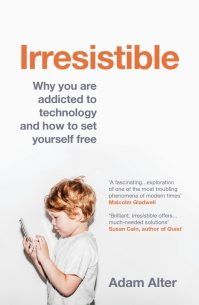
Irresistible: why you are addicted to technology and how you can set yourself free

by Adam Alter

cover

Synopsis

Irresistible is written by psychologist Adam Alter about how society is becoming addicted to our smartphones, laptops, game consoles and television. In other words time in front of a screen is becoming all consuming for most of us. Adam Atler explores how this affects our everyday life, relationships and mental well being. Towards the end of the book, Atler suggests ways we can use technology differently and how it will lead us to living happier lives.

My Quick Review

Well, this is a book I was in urgent need to read. I am as guilty as the next person of spending too much time on my phone, endlessly checking one social media site and then swiftly onto the next. I would say 80% of my smartphone use is probably completely unnecessary. The amount of productivity I could achieve instead of perusing the Instagram photos of a friend of a friend of friend’s account and LOLling at cute cat videos is beyond ridiculous (though I’m still not convinced cat videos are a complete waste of time). So, I thought this book would be perfect for me to read and digest. By the reaction I got when I first published the list of books we were going to read this year, it seems many of you out there were in need of this book too.

I found this book fascinating and very informative. I learnt a lot about addiction. For me, this book completely dispelled the myth that certain people have “addictive personalities” and it’s only these people that become addicted. It was also very interesting how the way game designers engineer their games, deliberately fosters behavioural addiction.

One small negative that I found with this book was that, I’m not sure how necessary or helpful some of the diagrams in the book were. I’m not convinced that I really needed a breakdown of the number of books that contain the word “perfectionism”. Just the fact that it’s increased over the years would have sufficed.

Alter, covered most aspects of screen time addiction, but I do feel it slightly lacked when it came to discussing people who just aimlessly peruse the internet without any interaction. Adler does provides a very good explanation on the gambling side of technology (referring to both actual gambling and the gambling high people obtain from “likes” on social media).

I also felt it would’ve been useful to have a short, accessible list of his suggestions for reducing technology use at the end of the book. Instead if you want that information again, you would have to read through the final chapter again.

The book did a good job of fairly representing the positive aspects of technology. I don’t feel the book could be accused of presenting a one-sided arguement.

As I said before the book was very interesting and I couldn’t put it down (making the book “irresistible”- boom!), but felt the title was slightly misleading. Whilst there were some suggestions, I didn’t really feel it was a book one read to enable the reduction of technology usage. Though it did provide excellent and detailed information regarding addiction and why technology is so addictive.

Overall, this is an excellent & fascinating book. However, I don’t appear to have reduced my screen time. Maybe I need to reread that final chapter?

Questions to Consider

  1. Did you learn anything new about addiction from reading this book?
  2. Since reading this book has it changed your attitude towards technology?
  3. Have you reduced the amount of time in front of a screen?
  4. Do you think the book explained the influence of the internet on society in enough detail?
  5. After reading this book, what are your views on society’s future with regards to technology and it’s influence?
  6. What do you feel was the overall purpose of this book?
  7. Do you feel this book succeeded with its purpose?
  8. What section/paragraph/sentence left a lasting impression on you, if any?
  9. Do you feel the writing style of the author was accessible?
  10. Has this book inspired you to read more books on a similar subject matter?

(Questions created by me)

You don’t have to answer these questions in your comments, but they might help to get you thinking about the book or to prompt a discourse.

October’s book is A Million Little Pieces by James Fey. I’ll be starting the conversation for this on Monday 6th November.

For a list of all the other books we’ll be reading this year, please click here.

Just Another Book Club- August Book

Please leave your comments below or within the appropriate post on my Facebook page. Please feel free to peruse other people’s comments and respond to them.

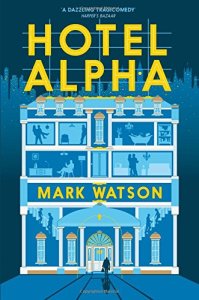
Hotel Alpha by Mark Watson

51wYJqtbPKL

Synopsis

Set in a high class London hotel over several decades, this book is told from two different viewpoints. Graham, a loyal, hardworking and traditional concierge and Chas, the hotel owner’s blind adopted son. Both characters have an idolised opinion of Howard, the charismatic owner of Hotel Alpha. But, is everything as it seems at the Hotel Alpha and is Howard everything people believe him to be?

Written by British stand-up comedian Mark Watson, the book also contains short stories at the end of the book and online about smaller characters from the main story,

My Quick Review

To my surprise, I thoroughly enjoyed this book. I’m not sure why I would be so surprised, maybe because it didn’t “grab me” within the first few pages, but I soon found myself turning the pages quite quickly and wanting to learn more about the hotel and the characters within.

I liked Mark Watson’s focus on his characters. This was a book that was both character and storyline led. I do feel the former was slightly stronger than the latter though. Whilst I was gripped by this book and desperate to find out the hotel’s secrets, I couldn’t help, but feel slightly disappointed when I found out these secrets. I had felt that I knew them already and that there wasn’t a shocking “big reveal”. The only true secret that was revealed, was that Lara and Ella were in a relationship, which really wasn’t much of a juicy secret for me. It smacked of “and guess what, she was GAY” shock horror! It was a weak big reveal.

There was also quite a big unanswered question (unless I missed it) with regards to Graham’s future. Was he intending to just leave Pattie at the end? He said he was going off to find Agatha, but never said what was going to happened to his relationship with Pattie? Was he going to leave her, then look for Agatha? Was he going to find Agatha first, then decide if he wanted to leave Pattie? Shouldn’t he have left her a long time ago as the author made it so patently clear that he was unhappy with her? Was Graham after all not-so-perfect as the book liked to depict?

I did like how the ending tied up nicely with finally bringing Graham in to the present. I felt quite affectionate towards Graham’s lack of enthusiasm for the modern age, but it was quite a relief when he relented in the end.

I loved all the historical references and nostalgia throughout the book. Many of which I can clearly remember. However, would the book have had as much of a story without the heavy referencing of them. Did these real life events help the author build his story? This isn’t necessarily a bad thing, but it is something that constantly propped the book up throughout.

Here’s another big question. Should Graham have actually revealed the truth? Is this a lie that was best left untold? And was it selfish of Graham to tell the truth? I can’t help, but think he did it as he couldn’t stand keeping it to himself any more. It was a relief for him. I’m not convinced he did it solely as he believed it was the right thing to do. Perhaps Chas did deserve to know the truth though.

Howard was absolutely an awful man, BUT he did do his absolute best to make amends with Chas. He brought him up as his own son and clearly loved him deeply. This brings me back to my question as to whether Graham should have told the truth. Did Howard deserve this? Possibly. It was the past catching up with him after all, but he did do his best at trying to redeem himself through Chas.

I’m not really sure I saw the point of the storyline surrounding Graham’s son. It did illustrate how technology was progressing and how that affected people’s jobs, but it generally didn’t hold much interest for me. It also irritated me that Graham seemed to go out of his way far more for Chas than he did for his own son. I can see his reasons for doing that at times, but his lack of fully invested parental interest in his own children was annoying. This also backs up my opinion that Graham was not-so-perfect.

It was really interesting to learn through this book what daily support a blind person needs and how much technology helped Chas. Whilst Graham saw technology as something to be resisted and only saw it through a negative light, technology was nothing but a positive presence in Chas’s life. This offered an interesting juxtaposition between the two characters and their viewpoints. This may be seen as an obvious comparison to make, but I still liked the point it was trying to empathise.

I loved the extra short stories at the end of the book. This was a refreshing idea from the author. It illustrated the convoluted nature of relationships and how nothing is as it seems on first impression. Briefly focussing on characters who had a connection with the main characters of the book and telling their stories helped bring Hotel Alpha alive, which after all was the biggest character of the book in the end.

Overall and despite its flaws, I found Hotel Alpha a very enjoyable and readable book that is worth investing your time in.

The online extra Hotel Alpha short stories can be found here.

Questions to Consider

You don’t have to answer these questions in your comments, but they might help to get you thinking about the book or to prompt a discourse.

1. The Hotel Alpha is full of secrets. Which made the biggest impression on you and why?

2. How would you describe the sense of place in Hotel Alpha, and would you say the hotel becomes a character in its own right?

3. Did your attitude to the characters remain consistent throughout the novel, or did your loyalties shift as you read? Which character provoked the strongest reaction from you?

4. How did the author create Chas’s point of view, given that he is blind and unable to describe things visually? Did you find this effective?

5. ‘In Howard’s own opinion, luck was not a whimsical force which flitted in and out of lives. It was a commodity: something you could make or buy.’ To what extent do you agree with Howard’s view that we make our own luck?

6. How does meeting Kathleen affect Chas and his relationships with others? What did you make of their love story?

7. A pivotal theme of the novel is the rise of technology and the internet. In what ways does the digital revolution aid and thwart the characters?

8. ‘I have heard it said that adversity is the truest test of character, and that the greatest people turn disaster into opportunity.’ Graham is talking about Howard here, but is this also true of other characters? Who else turns adversity to their advantage, and did you find them stronger or weaker for it?

9. Mark Watson is a stand-up comedian as well as a novelist. Would you describe Hotel Alpha as a tragedy or a comedy? In what ways do you think being a stand-up comedian might influence Mark Watson’s writing?

10. ‘I had seen a great many odd sights in the Alpha. That man who broke the door of Room 25, and his wife who hurled her wedding ring up into the balconies; a demonstration of a chemical mixture which, injected into the body of a dead person, could preserve their organs for hundreds of years; the American astronaut who was first to walk on the Moon.’ Some of these incidents, and many more, appear in the one hundred extra stories that accompany the novel and can be found at http://www.hotelalphastories.com. Have you read any of these stories and, if not, do you plan to discover them now you’ve read the novel? What do you make of the author’s decision to continue the story of Hotel Alpha online and how might this affect the reader’s experience of the novel?

September’s book is Irresistible” by Adam Alter. I’ll be starting the conversation for this on Monday 2nd October.

For a list of all the other books we’ll be reading this year, please click here.

Just Another Book Club- July Book

Woo-hoo our first book club discussion! Please leave your comments below or within the right book club post on my Facebook page. Please feel free to peruse other people’s comments and respond. Without further ado, let’s get into it.

All the Light We Cannot See by Anthony Doerr

51wG7x-S+0L._SX330_BO1,204,203,200_

Synopsis

Set during World War II, the book tells the parallel stories of two children, Werner Pfennig and Marie-Laure LeBlanc. Werner is a clever German boy who is bit of genius when it comes to radio engineering and Marie-Laure is a blind French girl in possession of a valuable jewel. Over 200 chapters we witness their lives before the war, the onset of war, what part they took during the war, how their lives finally connect and events after the war. It is a tale of survival, morals and ultimately love. It’s worth noting that it took American author Anthony Doerr 10 years to write this historical novel.

My Quick Review

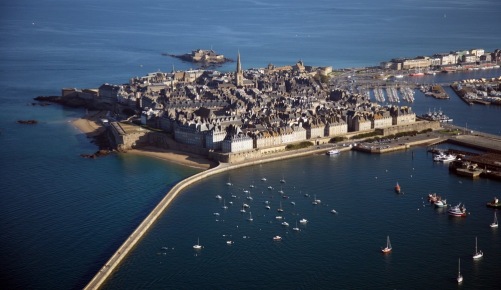
All the Light We Cannot See is so beautifully written it actually incites jealousy. I cannot help, but feel envious of the fact that I would never be able to write as well as this. The way Doerr describes scenes is so vivid, the reader has no problem with imagining them. In particular his description of Saint Malo, the house that Marie-Laure lived in and the bombing that took place there, sticks in my mind.

It was very interesting how the books depicts two different families torn apart by war for different reasons. So often books set during wars, tell the story from an adult’s perspective, so it was refreshing seeing how war affected children from both sides.

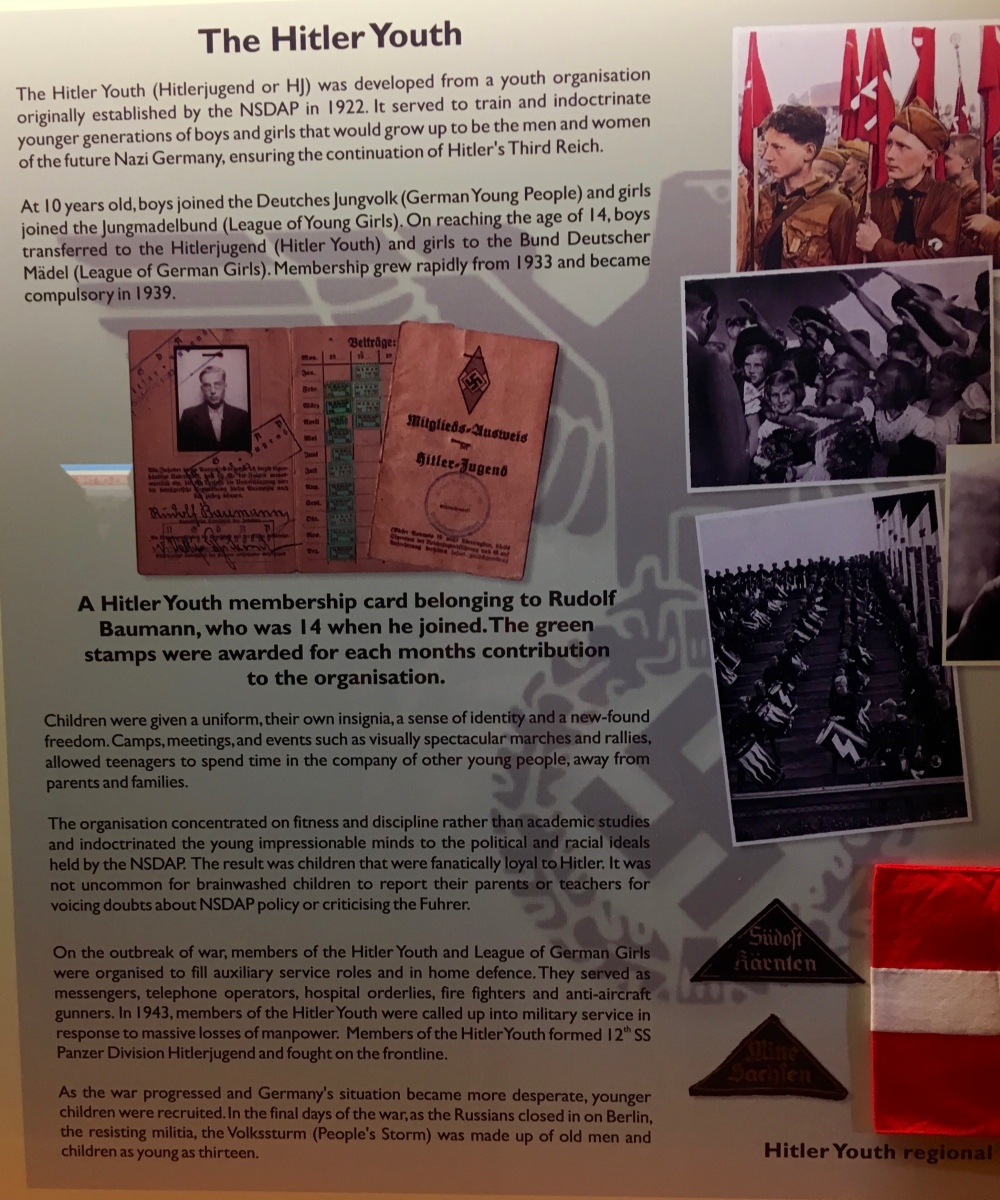
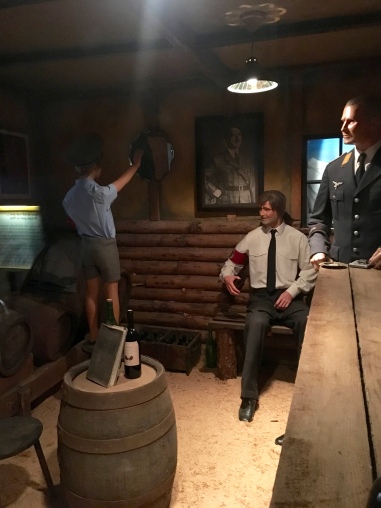
I recently visited Eden Camp, a Second World War museum inside an actual old prisoner of war camp, in North Yorkshire. It had a whole section on Hitler’s Youth, so I took a couple of (not very good photos) for you all.

IMG_7052

Information on the Hitler Youth

IMG_7055

A member of the Hitler Youth saluting a picture of Hitler

The book is made up of very short chapters. This gives the feel of a fast moving book that keeps you interested and makes you keep on turning the pages.

I can’t decide if I’m satisfied with the ending or not. Werner dies, Marie-Laure never finds her Father and the jewel is lost. However, I also feel this is a reflection on the reality of war. There are obviously so many unhappy endings in war and at least Marie-Laure continues on with a happy life.

Lastly, I want to mention the title of the book. Initially, it would seem to refer to two different things in relation to the two main characters. The more obvious one being Marie-Laure who is blind, whose other senses are heightened because of this. It also could be said that it might refer to the radio waves that we cannot see, but bring much light. This is a reference more so of Werner. However, I think the title also has a third reference, in that during something as hideous as a war, there is still much light. It may not be as obvious and would not dominate the discourse surrounding war as much, but nevertheless it is there. Do you have any other thoughts regarding the title?

As much as I loved this book, the story and the writing, I probably wouldn’t call it a masterpiece as many people are.

Whilst reading it, I could clearly imagine and predict this book will be turned into a film. I can’t see any evidence of it happening yet, but there certainly are rumours.

oU4jkTB5gb4o8fpZhQXyAfzj

Saint Malo today

Questions to Consider

You don’t have to answer these questions in your comments, but they might help to get you thinking about the book or to kickstart the discourse. 

1. The book opens with two epigraphs. How do these quotes set the scene for the rest of the book? Discuss how the radio plays a major part in the story and the time period. How do you think the impact of the radio back then compares with the impact of the Internet on today’s society?

2. The narration moves back and forth both in time and between different characters. How did this affect your reading experience? How do you think the experience would have been different if the story had been told entirely in chronological order?

3. Whose story did you enjoy the most? Was there any character you wanted more insight into?

4. When Werner and Jutta first hear the Frenchman on the radio, he concludes his broadcast by saying “Open your eyes and see what you can with them before they close forever” (pages 48–49), and Werner recalls these words throughout the book (pages 86, 264, and 409). How do you think this phrase relates to the overall message of the story? How does it relate to Madame Manec’s question: “Don’t you want to be alive before you die?” (page 270)?

5. On page 160, Marie-Laure realizes “This . . . is the basis of his fear, all fear. That a light you are powerless to stop will turn on you and usher a bullet to its mark.” How does this image constitute the most general basis of all fear? Do you agree?

6. Reread Madame Manec’s boiling frog analogy on page 284. Etienne later asks Marie-Laure, “Who was supposed to be the frog? Her? Or the Germans?” (page 328) Who did you think Madame Manec meant? Could it have been someone other than herself or the Germans? What does it say about Etienne that he doesn’t consider himself to be the frog?

7. On page 368, Werner thinks, “That is how things are . . . with everybody in this unit, in this army, in this world, they do as they’re told, they get scared, they move about with only themselves in mind. Name me someone who does not.” But in fact many of the characters show great courage and selflessness throughout the story in some way, big or small. Talk about the different ways they put themselves at risk in order to do what they think is right. What do you think were some shining moments? Who did you admire most?

8. On page 390, the author writes, “To shut your eyes is to guess nothing of blindness.” What did you learn or realize about blindness through Marie-Laure’s perspective? Do you think her being blind gave her any advantages?

9. One of Werner’s bravest moments is when he confronts von Rumpel: “All your life you wait, and then it finally comes, and are you ready?” (page 465) Have you ever had a moment like that? Were you ready? What would you say that moment is for some of the other characters?

10. Why do you think Marie-Laure gave Werner the little iron key? Why might Werner have gone back for the wooden house but left the Sea of Flames?

11. Von Rumpel seemed to believe in the power of the Sea of Flames, but was it truly a supernatural object or was it merely a gemstone at the center of coincidence? Do you think it brought any protection to Marie-Laure and/or bad luck to those she loved?

12. When Werner and Marie-Laure discuss the unknown fate of Captain Nemo at the end of Twenty Thousand Leagues Under the Sea, Marie-Laure suggests the open-endedness is intentional and meant to make us wonder (page 472). Are there any unanswered questions from this story that you think are meant to make us wonder?

13. The 1970s image of Jutta is one of a woman deeply guilt-ridden and self-conscious about her identity as a German. Why do you think she feels so much guilt over the crimes of others? Can you relate to this? Do you think she should feel any shame about her identity?

14. What do you think of the author’s decision to flash forward at the end of the book? Did you like getting a peek into the future of some of these characters? Did anything surprise you?

15. Aleksandr Solzhenitsyn once wrote that “the line dividing good and evil cuts through the heart of every human being.” All the Light We Cannot See is filled with examples of human nature at its best and worst. Discuss the themes of good versus evil throughout the story. How do they drive each other? What do you think are the ultimate lessons that these characters and the resolution of their stories teach us?

Just a reminder that August’s book is “Hotel Alpha” by Mark Watson. I’ll be starting the conversation for that on Monday 4th September.

For a list of all the other books we’ll be reading this year, please click here

Just Another Book Club- 2017

Books-IFOA-2016-Tanja-Tiziana

***For the list of books we’re reading for the first half of 2018 click here ***

Yes, my beautiful friends, I have set up a book club on these here pages for anyone to join in with this book worming fun.

I’m finding more and more often these days, that I’m reaching for my smartphone to entertain me rather than a book. Reading used to be my favourite pastime, but now it seems to be doing ‘If you were a cheese, which would you be?’ type quizzes. FFS (I’d clearly be Wensleydale & Cranberry btw) or looking at slideshows of celebrities who remarkably look a bit older, now that they are -you know- older.

So, I’ve started this book club as a way to motivate me to get back to my regular reading habits and I’d love you to join me.

Here’s how it will work.

  1. I will provide a list of 6 books, one for each month for the rest of the year.
  2. At the end of each month (or beginning of the following one, depending on how organised I’m being), I’ll pop a quick post giving my thoughts on the book.
  3. Your lovely selves can then provide your thoughts/opinions within the comments section and a discussion can evolve from there.
  4. Obviously, there’s no obligation. You can read all six, only three or just the one. Whatever suits you best or how much you want to join in.
  5. You can join in the discussion whenever you want, but the closer to the time I published my book review post the better, as you’re more likely to get a response from other readers.
  6. If this is a success, I’ll list 6 more books at the end of the year for the first half of 2018.
  7. Drinking wine/gin/tea/coffee isn’t obligatory whilst joining in with the discussion about these books, but it might help.
  8. Any questions, let me know.

Okay, so now for the 6 books for the rest of this year.

July: All the Light We Cannot See by Anthony Doerr (as you’re not seeing this in advance of July, I won’t publish the review post until 7th Aug. The next book will be a shorter one)

51wG7x-S+0L._SX330_BO1,204,203,200_

August: Hotel Alpha by Mark Watson

51wYJqtbPKL

September: Irresistible: why you are addicted to technology and how to set yourself free by Adam Alter (I thought this would be appropriate as we’re trying to smartphone less/read more).

cover


October: A Million Little Pieces by James Frey

51qh4Es5nmL._SX323_BO1,204,203,200_

November: Homegoing by Yaa Gyasi

30347641._UY200_

December: My Grandmother Sends Her Regards and Apologises by Fredrik Backman

9781444775853

The chosen list of books is final. If you don’t fancy reading a particular book one month, just give it a miss that month. If I carry on with this into 2018, I’ll select the odd old classic book too. I’ll always provide at least one non-fiction book within a list.

Lastly, I just want to thank the lovely Angela at You Are Awesome blog for providing me with the inspiration to set this up. Check out her blog post here about book clubs.

So, join me! Together we can put our phones down and pick up a book. Do me a favour first though and holler below in the comments (or within the comments of my Facebook page) if you fancy joining my book club. Also, please spread the word. It will be fantastic to get people from across the globe coming together to discuss a mutual love- books.

292553

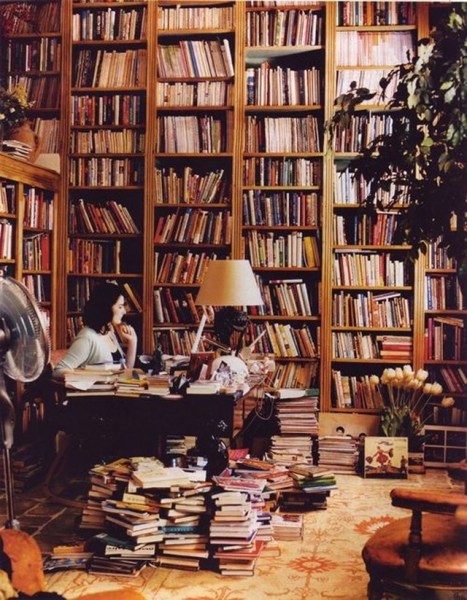
Nigella Lawson in her library. Further proof that I should actually be her.